

Tee Time Tales from Woodlands Golf Course in Glencoe
Each of the nine tees at Woodlands Golf Course offers more than just a starting point, they hold stories that give our course its unique character. Whether you found this page while browsing our website or by scanning a QR code out on the course, you’re just a swing away from discovering the incredible tales behind each tee.
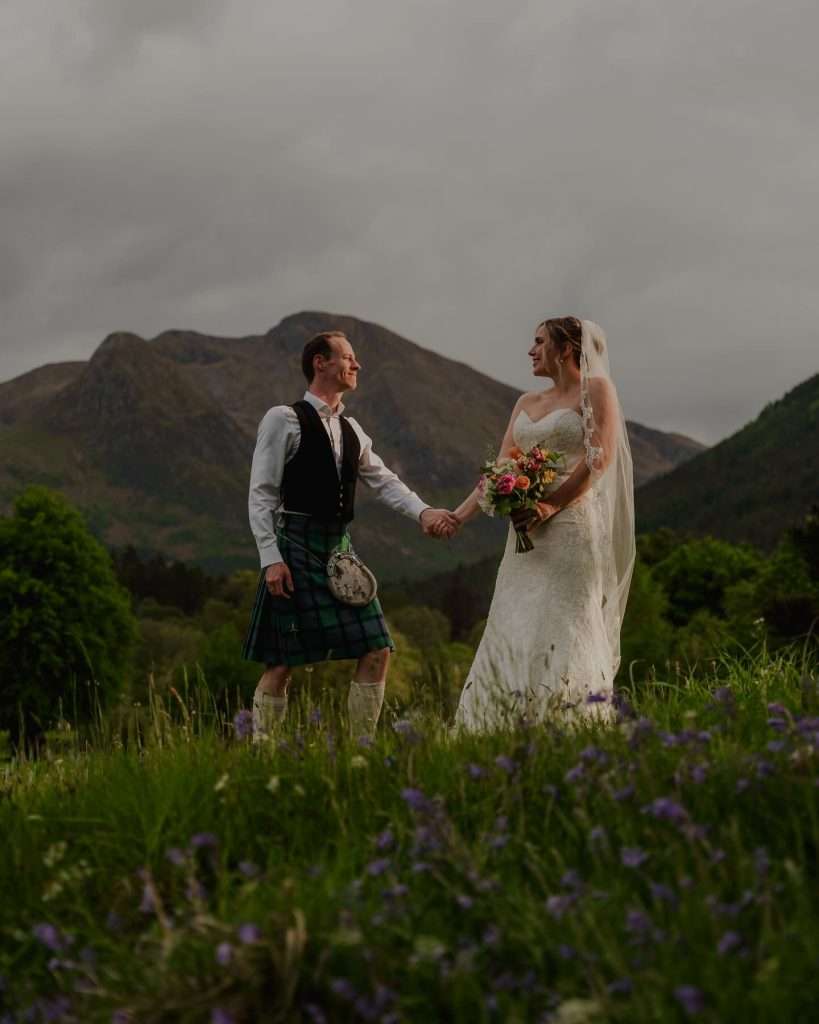
Tee 1: The Hungry Lime Tree
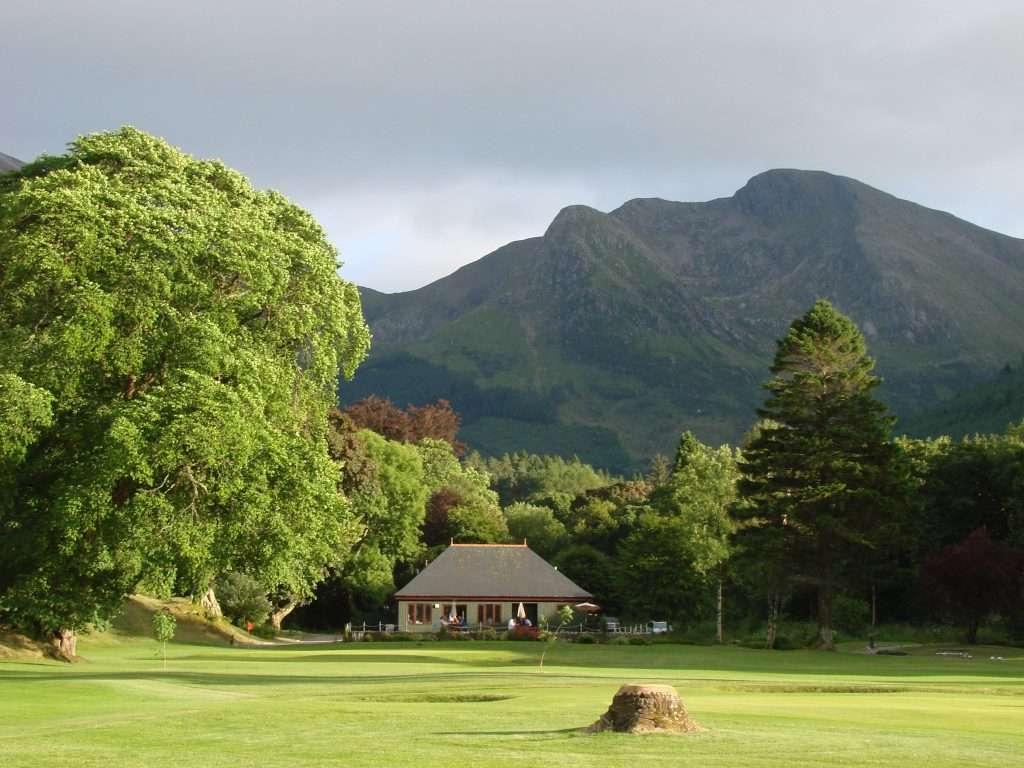
If you’ve played this course before, you’ll undoubtedly know the Hungry Lime Tree well. Too well, in fact! Standing proud (and frequently in the way) near the first tee, this mighty lime tree has a habit of catching shots that were definitely going to be perfect! Golfers have been known to grumble about its placement, but perhaps the Hungry Lime is just looking for a little more attention!
After all, lime trees (or Lindens) have long been symbols of love and devotion. Across the Woodlands Estate, you’ll find another pair of these majestic trees, known locally as the Marriage Trees. According to legend, they were planted centuries ago by two lovers on their wedding day to commemorate their bond. It’s said that standing between them and sharing a kiss will bless your union with a lifetime of good fortune. And when lime trees grow side by side, their trunks and branches may eventually merge, supporting each other as they age. This natural phenomenon is fittingly called inosculation, from the Latin word ōsculārī, meaning to kiss inwardly.
Tee 1 is sponsored by Our Place Your Story
For couples looking to create their own legend, Our Place Your Story specialises in elopement photography and planning across Glencoe’s glorious landscape. Whether you’re exchanging vows under ancient trees, beside a glistening loch or on a windswept mountain, Katie & Brian will capture the moment beautifully.
Tee 2: Ferryman’s Fluke
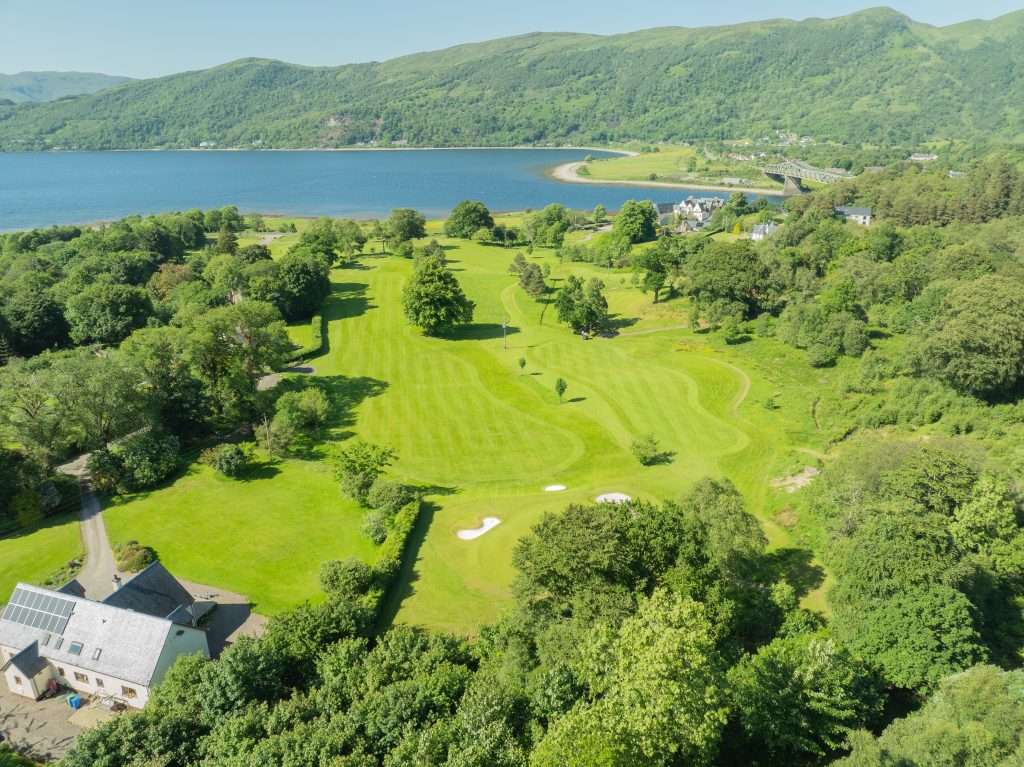
For centuries, the narrows of Ballachulish (translated from Gaelic to Village by the Narrows) has been a bustling hub of activity. Ferries have crossed these waters for as long as boats have existed, and the loch was once a favoured route of the Vikings!
By 1800, the Ferry House Inn was welcoming weary travellers, and in 1877, the Ballachulish Hotel you see today replaced the original inn, which impressed Queen Victoria herself, who noted the “beautiful hotel” at Ballachulish Ferry in her journal.
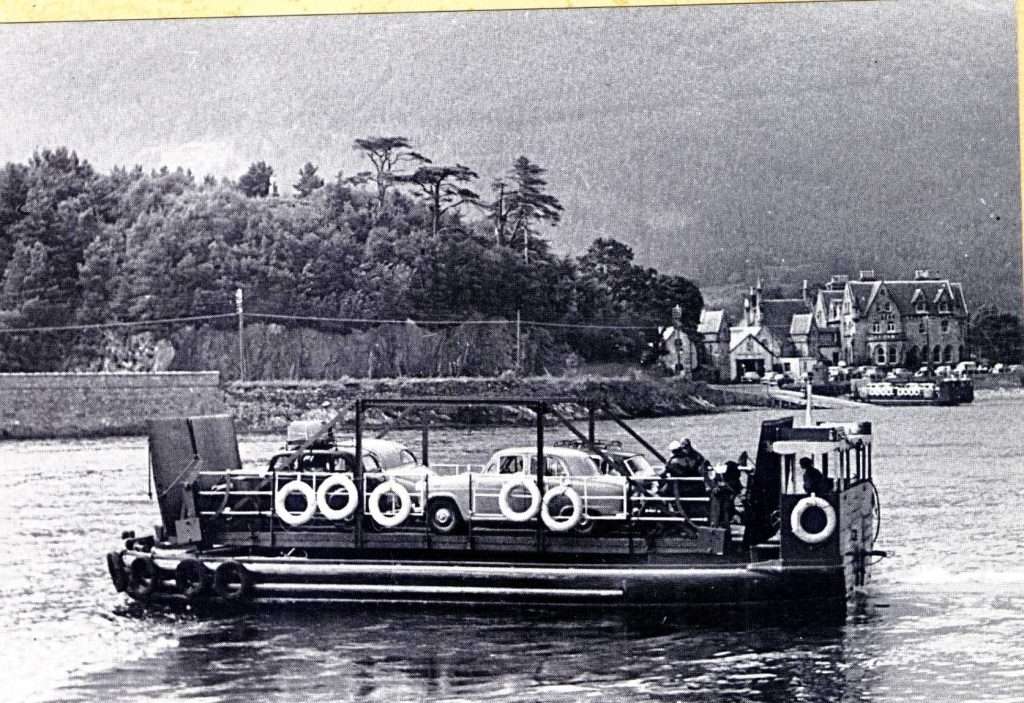
In 1906, the first car ferry crossing opened for business. Operated by Ballachulish Hotel, the ferry was a humble affair, where a car would be driven onto planks covering the width of the vessel before several ferrymen would row it across the narrows!
By 1912, the ferrymen could finally hang up their oars when the world’s first motorised turntable ferry, the Glencoe, arrived. It could carry one car at a time, which was fine since there were only 800 cars in the entire UK, but by the 1930s, there were over a million cars on the roads! The Glencoe 2 was launched and over the years that followed, the ferry upgrades continued.
In 1935, the Maid of Glencoe and the Queen of Glen Albyn joined the fleet and by 1957, the ferrymen were living the high life aboard the Appin Chief, which was the first ferry in the area with a shelter for the crew!
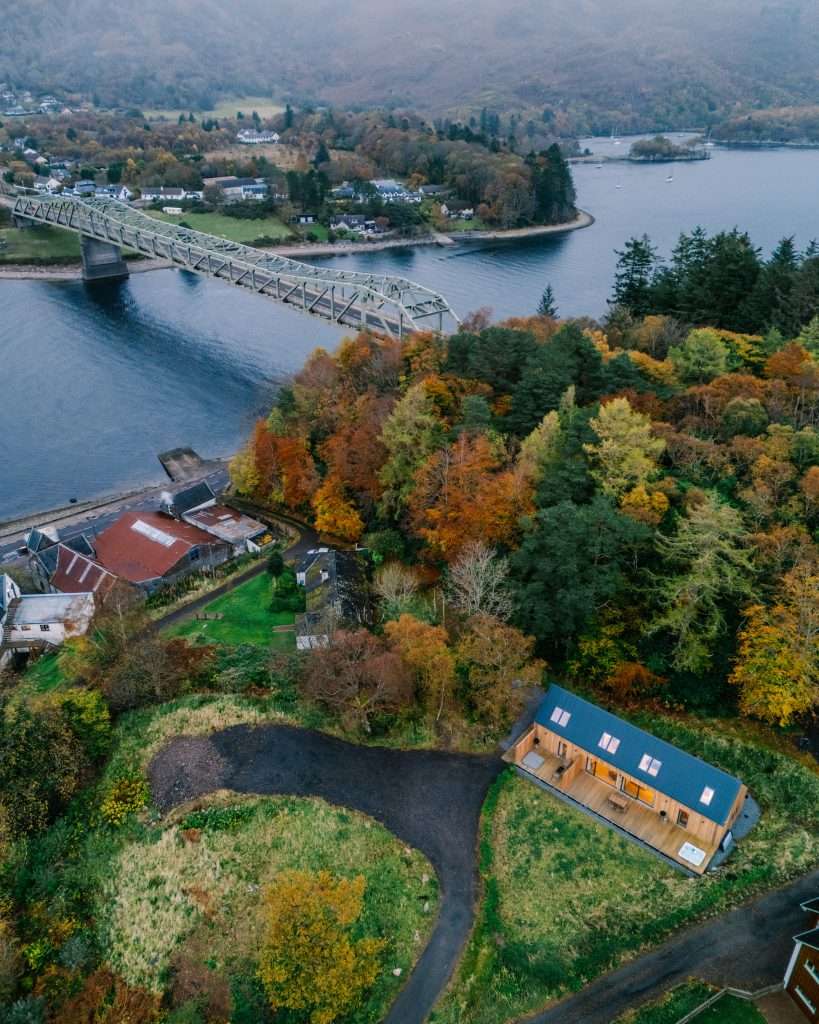
In 1975, the ferry service was retired, making way for the Ballachulish Bridge that now stretches across the loch, though we like to think the old ferrymen of the past are still watching over their crossing, shaking their heads at traffic jams.
Sponsored by Fish Restaurant at the Ballachulish Hotel
Thankfully, there’s one thing that hasn’t changed, the spectacular seafood from the loch! Fish Restaurant at the Ballachulish Hotel is the perfect place to enjoy the freshest local catch, from hand-dived scallops to just-landed langoustines. Overlooking the very waters that carried Norsemen, clan chiefs and countless ferry passengers, this is where history meets a truly delicious plate of fish and chips!
Tee 3: Cairn in the Cabbage
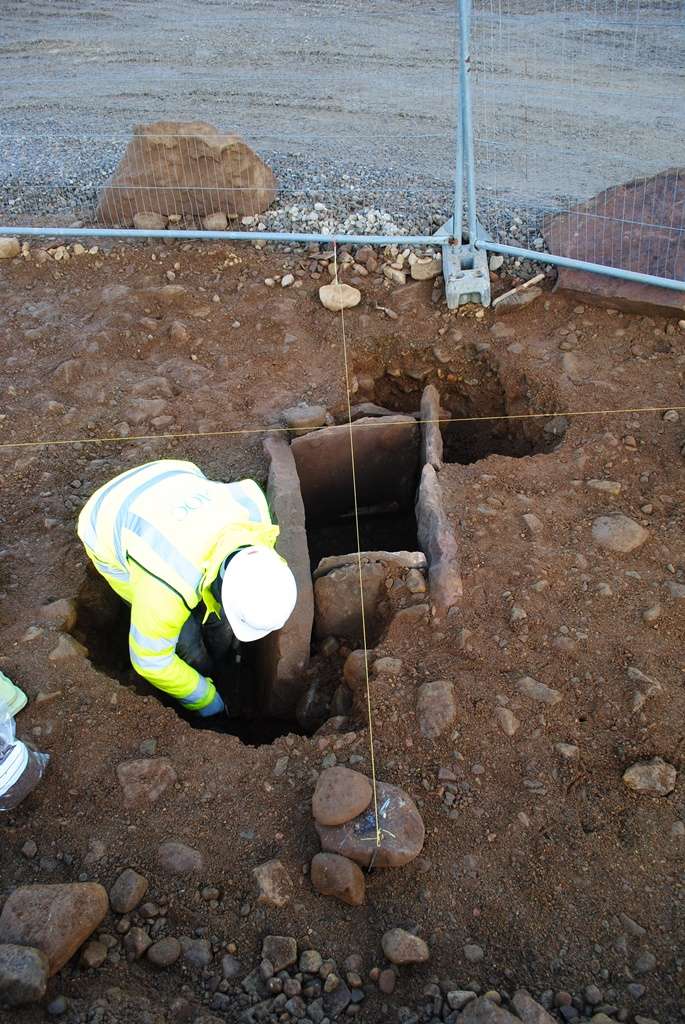
Golfers might assume the Cairn in the Cabbage refers to a wayward shot landing somewhere inconvenient, but the story here is WAY more significant, because buried within the ‘cabbage’ or rough at Tee 3 lies a prehistoric burial cist, a relic from the Bronze Age (1200–1000 BC).
Once part of a ginormous stone cairn measuring 20m x 17m, this ancient burial site would have been a place of deep spiritual and cultural significance, chosen as the final resting place for someone of great importance. Though time has worn away much of the structure, the chamber itself remains, standing as a quiet reminder of those who came before us. It’s good to know that if your ball finds its way into an unexpected resting place, it could be in ancient company!
This land has long been cherished, and across the loch, another remarkable discovery speaks to its ancient past. In 1880, during the construction of a house, workers unearthed the Ballachulish Figure, a 2,500-year-old wooden carving, known locally as the Ballachulish Goddess. Standing at 5ft tall and carved from alder, she is believed to represent either a Goddess of Fertility or the legendary Cailleach Bheithir, the mythical creator of mountains and harbinger of winter storms. The original now resides in the National Museum of Scotland, but you can visit a replica right here in Glencoe at the Glencoe Folk Museum.
Sponsored by Manson & MacBeath Funeral Directors
For thousands of years, this landscape has been a place of remembrance, legacy and storytelling. Tee 3 is sponsored by Manson & MacBeath Funeral Directors, who understand the importance of honouring those who have gone before us. With care, compassion and dignity, they help families create meaningful farewells that reflect the lives and legacies of their loved ones.
Tee 4: The Dragon’s Tooth
To the south, towering over the Woodlands Estate, stands Beinn a’ Bheithir, a mountain both admired and feared! Its Gaelic name translates to The Peak of the Beast, and for very good reason. This dramatic landscape has long been home to the legend of the Beithir, a fearsome dragon whose lair was hidden high among the ridges. One such ridge, The Dragon’s Tooth, was the original name of Woodlands Golf Course.
According to local lore, the Beithir was no ordinary dragon. She slithered through the glens with terrifying speed, descending from the stormy peaks to hunt. When thunder rumbled and lightning split the sky, villagers knew she was near, her massive tail thrashing along the river’s edge, her eyes scanning for her favourite prey – children!
Many tried to slay the beast, but her scales were impenetrable and her venom lethal. It was not brute strength, but cunning, that finally defeated her, when on one stormy night, a brave ferryman named Charles devised a daring plan. He lured the Beithir onto his boat with burning animal carcasses, enticing her into a feeding frenzy. As she gorged herself, Charles, hidden within the flames, drove his spear into her throat, sacrificing himself to end her reign of terror. To this day, when the wind howls through the mountains, some say you can still hear her dying cries echoing through the glen.
Sponsored by the Highland Bookshop
If this tale has sparked your imagination, the Highland Bookshop in Fort William is the place to explore more of the area’s incredible folklore, fairytales and legends. Whether you’re drawn to mythical beasts, dramatic Highland landscapes or epic tales of adventure, their collection is a treasure trove waiting to be discovered.

Tee 5: Isle Be Putting
The islands scattered across Loch Leven aren’t just scenic, they’re steeped in history, legend and a big dose of drama!
One particularly tragic tale speaks of Clach Phadruig (Peter’s Rock), where a Norseman once leapt into the freezing waters to save his drowning son. Despite his desperate efforts, he was unable to reach him in time. It’s said that the marks on the rock come from where he struck his cane in grief, a lasting imprint of a father’s sorrow.
But it wasn’t all heartbreak on these waters. In fact, Loch Leven also played host to some rather spirited negotiations – quite literally. The three dominant clans of the area, the Stewarts, MacDonald and Camerons, would row out to the Isle of Discussion whenever tensions ran high. There, over a generous supply of whisky, they would (hopefully) talk things through. Once an agreement was reached, they’d proceed to the Isle of Covenant to formalise their truce. Given Scotland’s long history of clan feuds, it’s fair to say that whisky may have done more for diplomacy than swords ever did!
Sponsored by Waters Edge Restaurant at the Isles of Glencoe Hotel
If all this talk of islands, lochs and whisky has left you with an appetite, the Water’s Edge Restaurant at the Isles of Glencoe Hotel is the perfect place to refuel. With stunning views across Loch Leven, it’s the ideal spot to soak in the scenery while enjoying fresh, locally inspired dishes.
Tee 6: Faerie Wood Fairway
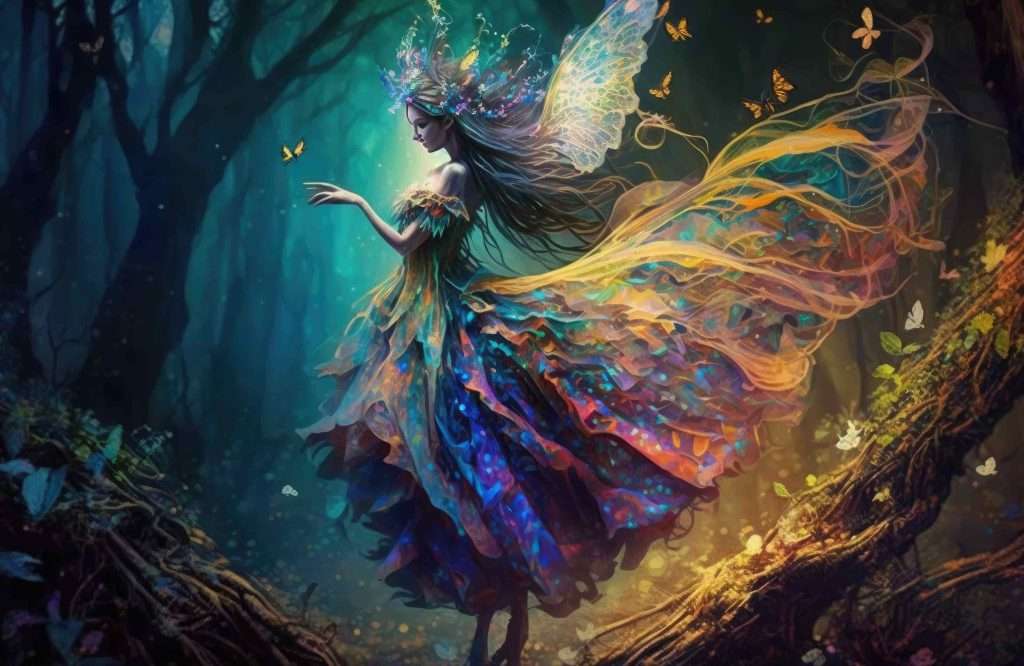
If you veer away from Tee 6, you might end up stepping into an enchanted place where surprises are always lurking, waiting at every turn. Be cautious, as some visitors are never seen again, and those who return are often – changed!
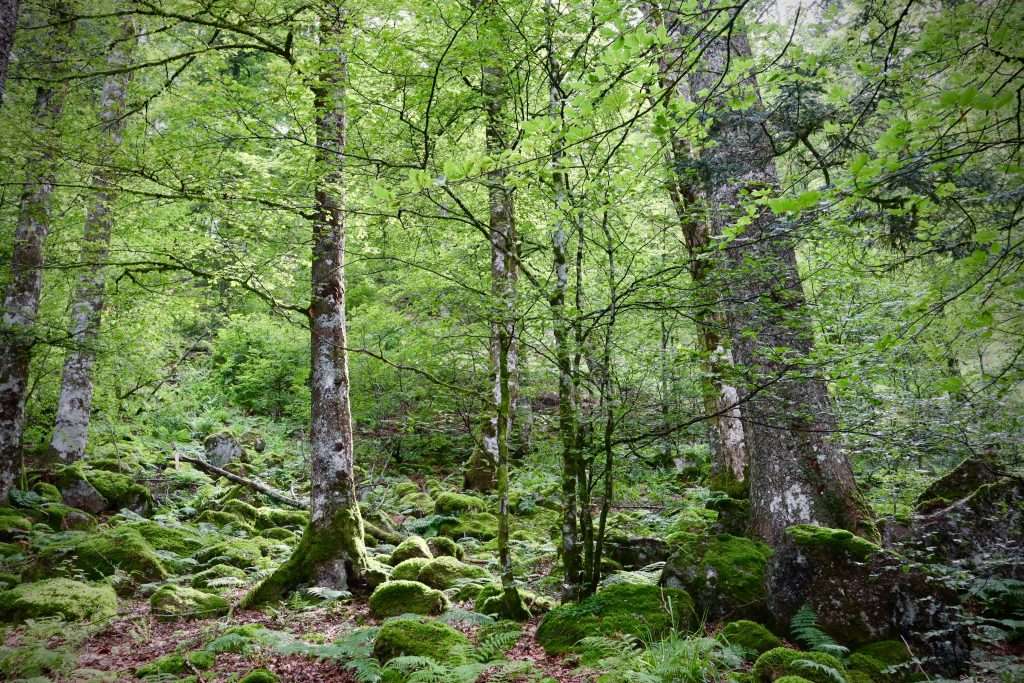
The Faerie Woods have been here for generations and are officially recognised as ancient on maps! But did you know that it’s not just any woodland? This special habitat is part of the Celtic Rainforest, a rare ecosystem that thrives in our mild and moist coastal climate, creating perfect conditions for some of the world’s rarest bryophytes and lichens. It’s even rarer than the Amazon Rainforest and has earned international acclaim from NatureScot for being “incredibly rare on a global level”.
The magic of this place doesn’t stop with its unique ecosystem. Fairies (or faeries as the Scots say) are said to weave their magic among the trees. Who knows what mystical beings you might encounter as you walk through these ancient woods. Please be sure to stick to the paths, avoid wandering alone and report any unusual occurrences to reception!
Sponsored by NatureScot
NatureScot is the proud sponsor of tee 6 and they work tirelessly to protect and preserve places like the Faerie Wood. Their dedication to conserving Scotland’s wild places ensures that areas like this Celtic Rainforest continue to enchant visitors for generations to come.
Tee 7: Fast Track
At the top of the Woodlands Estate, you’ll find remnants of a bygone era, the old Ballachulish to Oban railway line. Construction of this ambitious line was approved by an Act of Parliament in 1896, and work began in 1898 under the Callander and Oban Railway Company; however, building a railway through steep mountains and around sprawling sea lochs was no small feat. The project was one of the first in the UK to make extensive use of concrete, an innovation at the time. It also required crossing Loch Etive via Britain’s largest single-span steel bridge, second in length only to the mighty Forth Railway Bridge.
Despite these engineering triumphs, the line, which was opened in 1903, was never heavily used. With just three scheduled passenger services per day, its main freight came from Ballachulish Slate Quarry and even that was often more efficiently shipped by boat.
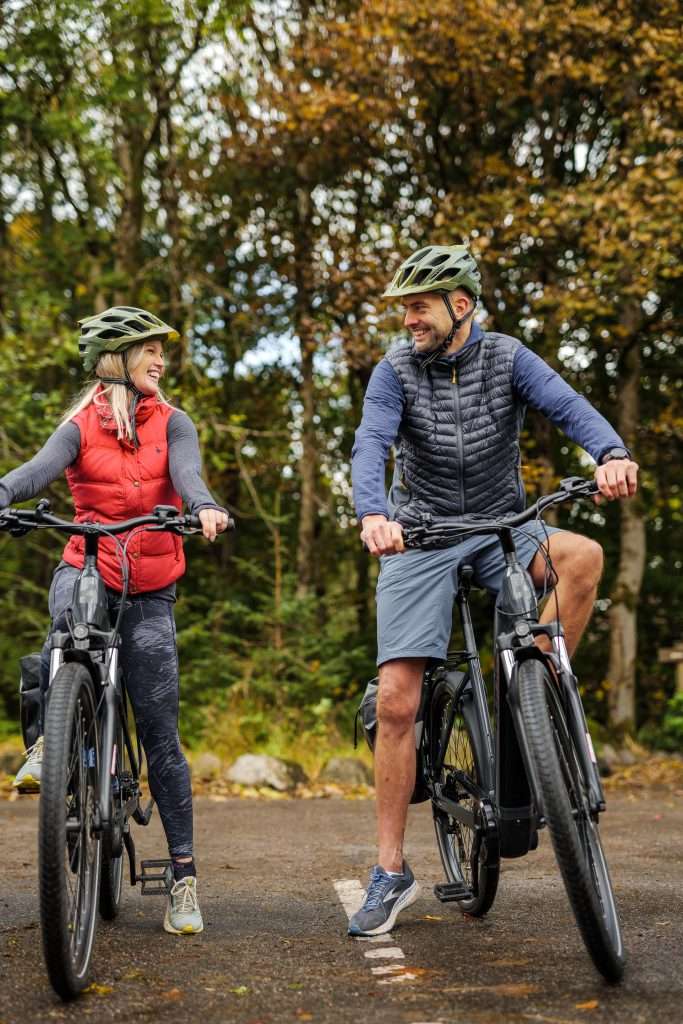
By 1966, the British Railway Board decided to close the line, leaving behind what is now a scenic cycle and walking trail, part of the Caledonia Way.
If you fancy retracing the old railway route at a more leisurely pace, why not hire an e-bike from Woodlands Activity Centre and explore the sights along the track?
Sponsored by Fergusons Transport
Much like the railway, Tee 7’s sponsor, Fergusons Transport, has a rich history in Highland logistics. What began in the 1950s with horse-drawn deliveries in Argyll has evolved into a family-run, multi modal transport company offering rail, road and sea haulage solutions from their base in Fort William. Today, just as the old railway once connected the Highlands to the wider world, Fergusons continues to keep goods (and history) moving.
Tee 8: Down the Burn
The granite peaks towering nearly 1000m above the Woodlands Estate have stood for over 400 million years, shaping the landscape we see today. These mountains aren’t just a breathtaking backdrop, they’re a playground for hillwalkers, climbers, and legend seekers alike.
Among these majestic summits are Sgorr Bhan (The White Peak), Sgorr Dhearg (The Red Peak), Sgorr Dhonuill (Donald’s Peak) and Creag Ghorm (Blue Rock). Together, these peaks eerily encircle Beinn a’ Bheithir, The Mountain of the Beast. And yes, according to legend, that beast was no ordinary creature. Our neighbour is said to have once been home to a fearsome dragon!
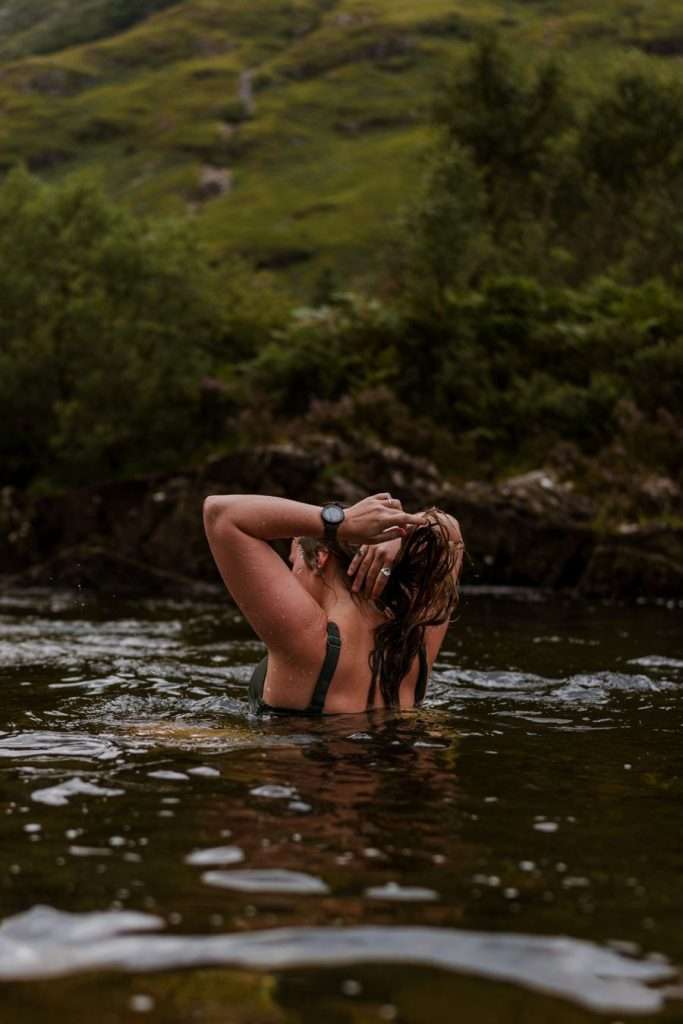
The Abhainn Greadhain (The Rattling River) tumbles down from these hills, carrying rainwater and snowmelt into Loch Linnhe. Its name comes from the clattering sound of rocks tumbling along the riverbed after heavy storms.
But this river isn’t just a pretty feature, it’s powerful! In 2019, a hydroelectric dam was built, harnessing its energy to generate 554kW at peak, producing enough electricity to power 420 homes annually!
So, as you tee off along the riverside, take a moment to appreciate the untamed power of water.
Sponsored by Crieff Hydro Hotel
Speaking of water, it plays a big role in our Tee 8 sponsor’s history! Crieff Hydro Hotel is a family-friendly retreat in Perthshire, but did you know its origins are all about hydrotherapy? Back in 1867, Dr Thomas Meikle was inspired by a trip to Austria, where he witnessed the healing power of hydrotherapy hotels. Determined to bring the concept to Scotland’s fresh Highland air, he founded the Crieff Hydropathic Establishment. Today, the hotel’s original Victorian spa still offers hydrotherapy treatments, letting guests soak up over 150 years of relaxation history!
Tee 9: Assassin
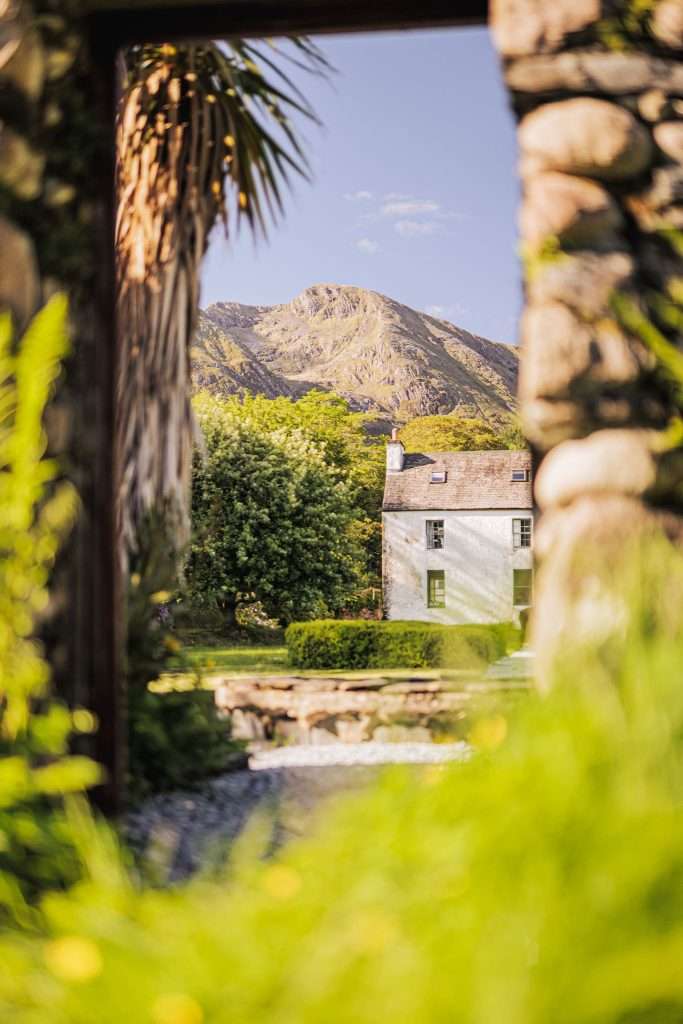
As you stand on Tee 9, take a moment to cast your gaze towards the magnificent Ballachulish House, a structure with a history as dramatic as it is storied. Once the seat of the Stewart clan, this house was originally built in 1640, but its past is filled with intrigue, tragedy and betrayal.
In 1692, while Major Duncanson of King William II’s army was staying here, he gave the infamous order for the Glencoe Massacre, an event that stained Scotland’s history with blood. Later, in 1746, following the defeat of the Jacobite forces at Culloden, Hanoverian soldiers set the house ablaze, leaving it in ruins.
The current Ballachulish House was rebuilt in 1764, but its grim history didn’t end there. In 1752, Colin Campbell, a notorious landowner, was shot in the back and killed as he evicted tenants from Jacobite estates. His murder, linked to his harsh actions following the defeat at Culloden, sparked a manhunt across Scotland. The weapon was found lodged in a nearby yew tree, and the reward offered by King George II led to a hunt that became one of Scotland’s largest.
But the real tragedy came when a local man, James Stewart, was wrongfully arrested and made a scapegoat. Despite widespread belief in his innocence, he was subjected to a sham trial and hanged in 1752 overlooking the ferry crossing. His body was left to hang for 18 months as a grim public warning!
The true murderer, believed to be Donald Stewart of Ballachulish House, is said to have fled Scotland in guilt, secretly burying James’ body. This dark chapter in Scottish history was immortalised by Robert Louis Stevenson in his novel Kidnapped, and locals still speak of ghostly tales surrounding the house, including the legend of a headless horseman said to haunt the grounds.
Sponsored by the Stewart Society
Tee 9 is very aptly sponsored by the Stewart Society, a group dedicated to all those who bear the name Stewart (or Stuart, Steuart or Steward) as well as those with connections to the Stewarts. The Society’s mission is to celebrate the Stewart legacy through philanthropy, history, genealogy and fostering a sense of kinship. With a fantastic calendar of events ranging from Highland Games to social dinners, there’s always a way to connect with fellow Stewarts and explore your heritage.